CBD rehab drinks might look “legal everywhere” on shelves and online, but the actual answer is much more complicated. A legal and regulatory review shows that these beverages sit in a gray zone where federal rules, state laws and agency enforcement all collide.
At the federal level, hemp-derived CBD got its start from the 2018 Farm Bill, which removed hemp (cannabis with no more than 0.3% delta-9 THC by dry weight) from the Controlled Substances Act. That change made hemp and its derivatives, including non-intoxicating CBD, federally lawful so long as they stay under the THC threshold.
However, that same shift did not fully legalize CBD beverages. The U.S. Food and Drug Administration (FDA) regulates CBD as a drug ingredient because it is the active component in the approved epilepsy medication Epidiolex. Under the Federal Food, Drug, and Cosmetic Act, once an ingredient is used in an approved drug, it is generally barred from use in conventional foods or dietary supplements without specific FDA rulemaking.
In 2023, FDA confirmed that existing food and supplement pathways are “not appropriate” for CBD and announced it would work with Congress on a new framework instead of issuing its own rules. Practically, that means CBD rehab drinks marketed as standard beverages are still technically illegal in interstate commerce, even if they are widely sold.
On top of that, federal regulators and legal commentators emphasize the “source rule”: hemp-derived CBD with less than 0.3% THC is treated differently from CBD extracted from marijuana, which remains a Schedule I substance under federal law. Any CBD rehab drink made from cannabis rather than hemp is still illegal at the federal level, regardless of its CBD content.
State laws then layer on a patchwork of permissions and restrictions. Some states explicitly allow hemp-derived CBD in foods and beverages under their own programs. Others treat CBD drinks cautiously or prohibit them outright. Legal surveys show a growing trend of state-level rules targeting hemp-derived cannabinoid products, especially where intoxicating variants like delta-8 THC have raised safety concerns.
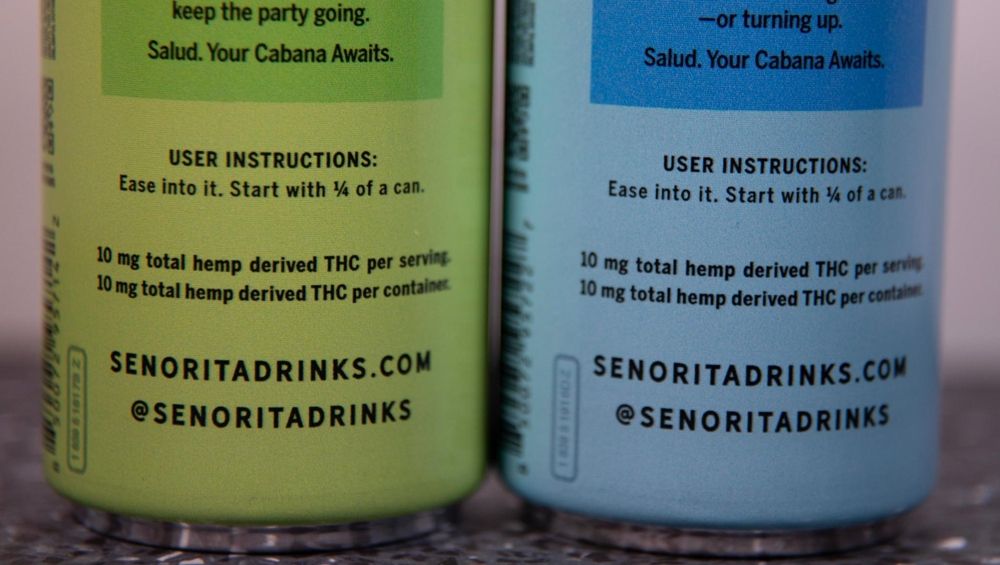
California offers a clear example of how restrictive these policies can become. Emergency regulations there make the retail sale of hemp foods, beverages, and dietary products with any detectable THC unlawful outside the licensed cannabis system. That means a CBD rehab drink with even trace THC might be banned from mainstream grocery shelves in that state, while a similar product could still be sold in a dispensary or remain legal in another jurisdiction.
Recent federal legislation tightening the definition of legal hemp and limiting total THC per product aims mainly at closing loopholes for intoxicating hemp-derived THC, but it also forces brands to re-evaluate formulations that combine CBD with higher-THC ingredients.
For CBD brands, the takeaway is blunt: CBD rehab drinks are not uniformly legal across the United States. Their status depends on (1) hemp versus marijuana sourcing, (2) THC content and cannabinoid profile, (3) whether products cross state lines, and (4) the specific state and local rules where they are made and sold. Until Congress or FDA creates a clear, nationwide framework for CBD in food and beverages, CBD rehab drinks will remain a promising but legally fragmented segment of the wellness market.